



In 2025, Phu Tho Province’s GRDP grew by 10.52%, the highest growth rate in the Northern midlands and mountainous region. The industrial and construction sector recorded growth of 16.13%, contributing 7.72 percentage points to overall economic growth. In the first six months of 2026, industrial production maintained its strong growth momentum, expanding by 15.94% and continuing to serve as the main driver of the provincial economy.
These impressive figures demonstrate the strong growth potential of Phu Tho’s industrial sector. However, to achieve its target of sustaining annual industrial growth of 15–15.5% during 2026–2030 and to establish a green, smart and modern industrial base, Phu Tho needs to focus on addressing the key bottlenecks currently constraining industrial development.
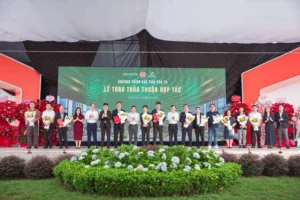
Identifying key bottlenecks
A review of industrial development in Phu Tho indicates several major constraints affecting the sector, including the following:
Compensation, land clearance and resettlement remain the most significant bottlenecks for industrial projects. Delays in handing over cleared land affect the schedule for allocating land to investors, which in turn delays infrastructure development and the attraction of secondary investment projects.
In several industrial parks and industrial clusters, shared technical infrastructure and environmental protection infrastructure remain incomplete, limiting their ability to accommodate and attract secondary investors. In addition, off-site socio-economic infrastructure in some localities has not been developed in a sufficiently coordinated manner up to the boundaries of industrial zones and clusters. This constrains connectivity and operational efficiency, (due to gaps in clean water supply and transport infrastructure).
Another notable bottleneck is the underdevelopment of supporting industries relative to their potential. Linkages between FDI enterprises and domestic enterprises remain limited, while many domestic firms continue to face constraints in technological capabilities, management capacity, automation and compliance with international standards. Production remains concentrated primarily in processing and assembly activities, which generate relatively low domestic value added.
At the same time, the availability of high-quality human resources is increasingly becoming a decisive factor in industrial competitiveness. At present, only around 34.6% of the workforce holds formal qualifications or certificates, while high-tech sectors such as electronics, semiconductors, artificial intelligence and the digital economy require increasingly advanced technical and professional skills.
Core enterprises, driving projects and supply chains
Phu Tho has developed a relatively diversified industrial ecosystem, with a number of core enterprises playing a leading role in economic growth and exports while contributing to the formation of supporting industry network. These include Honda Vietnam and Toyota Vietnam in the automotive and motorcycle sectors, as well as major electronics manufacturers such as Compal, Accton, Arcadyan, BHFLEX, Solum, Power Logics, DKT, Optrontec, Jahwa and Haesung, etc. These enterprises have substantial production capacity, significant potential for technology spillovers, and generate demand for domestic suppliers to participate in global value chains.
Honda Vietnam currently produces approximately 2.3 million motorcycles per year, accounting for around 80% of the domestic market, with a localisation rate exceeding 90% and a network of 368 suppliers. Toyota Vietnam has likewise established a supply chain involving a number of Vietnamese enterprises and has actively supported domestic suppliers in strengthening management capabilities, improving production processes and increasing their participation in global supply chains.
To generate new sources of growth, Phu Tho has identified the development of industrial parks and the attraction of high-tech, deep-processing and supply-chain-oriented investment projects as key priorities for 2026–2030. In response to the province’s development needs and the major policy directions of the central government, Phu Tho has developed and adopted its “double-digit” economic growth” Scheme” for 2026–2030, with a vision to 2045. The province has also approved a list of projects calling for investment, as well as a list of sectors and projects subjected to investment restrictions or exclusion, for the 2026–2030 period. Under these priorities, the industrial sector will focus on attracting 82 investment projects, including projects for the development of industrial park and industrial cluster infrastructure, as well as transport connectivity and logistics infrastructure.
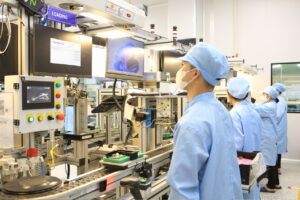
According to the planning framework to 2030, Phu Tho is expected to have 57 industrial parks and 133 industrial clusters, with a combined planned area of more than 21,300 hectares. To date, 32 industrial parks have been established, of which 18 are operational, with an average occupancy rate of nearly 71%. These industrial parks have attracted 880 valid investment projects, including 525 FDI projects with total registered capital of more than US$11.4 billion. With regard to industrial clusters, the province has established 66 industrial clusters, attracting approximately 930 secondary investment projects and generating employment for more than 37,000 workers.
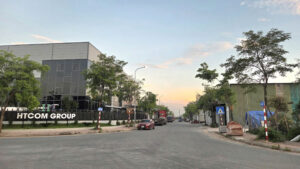
To develop sustainable industrial supply chains, Phu Tho is strengthening linkages between FDI enterprises and domestic firms, while supporting domestic enterprises in technology upgrading, management-capacity development and compliance with the technical standards required by major multinational corporations. At the same time, the province is prioritising next-generation FDI associated with technology transfer, the development of supporting industries and high-quality workforce development. Phu Tho aims to establish a specialised supporting-industry industrial park and attract at least 50 domestic supporting-industry enterprises to participate in local supply chains.
Decisively remove bottlenecks and generate new growth drivers
Based on the current situation and the difficulties, constraints and bottlenecks encountered in industrial development in recent years, Phu Tho will focus on implementing the following key measures:
Effectively implement key schemes for attracting strategic investors, next-generation FDI, and facilitating linkages between domestic and foreign enterprises, thereby mobilising investment capital more effectively, particularly in foundational industries and strategic technologies.
Regularly monitor and assess the production and business performance of enterprises and industrial establishments in order to identify and address difficulties and constraints in a timely manner, enabling enterprises to maintain stable operations and maximise production capacity. Particular attention will be given to key products contributing significantly to provincial economic growth, including electronic components, automobiles, motorcycles, garments and steel products, etc.
Intensify efforts to resolve bottlenecks relating to land, land clearance, infrastructure and investment procedures. The province aims to commence construction of four new industrial parks, approve investment policies for nine industrial parks, commence construction of an additional three industrial clusters, and establish 6–10 new industrial clusters.
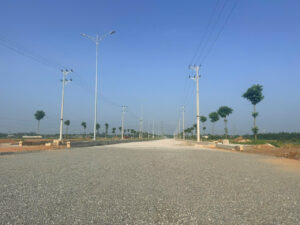
Continue improving the investment and business environment by accelerating administrative reform, implementing the “green channel” mechanism, and enhancing the effectiveness of the “Coffee with businesses” model.
Prioritise the attraction of high-tech, electronics, semiconductor, processing and manufacturing projects, as well as industrial park infrastructure projects, with a target of attracting approximately US$1 billion in additional FDI during the second half of 2026.
Accelerate land clearance and the completion of on-site and off-site technical infrastructure for industrial parks and clusters; creating a sufficient supply of fully cleared land capable of accommodating large-scale projects. Priority will be given to transport connectivity, logistics infrastructure, electricity and water supply, telecommunications, and waste treatment systems.
In addition, the province will ensure the reliability of energy infrastructure, particularly key electricity-grid projects, in order to prevent power shortages and disruptions to energy supply chains. Investment in transport and logistics infrastructure will be accelerated, including the completion of inter-regional transport links and the development of a Free Trade Zone (FTZ), regional logistics hubs, bonded warehouses, modern warehousing and distribution facilities, etc. Develop high-quality human resources and strengthen partnerships between enterprises and educational and vocational training institutions to meet the workforce requirements of electronics, precision engineering, automation, supporting industries and high-tech sectors.
The Provincial People’s Committee has also proposed that central ministries and agencies continue to refine policies and regulatory frameworks on land, investment and industrial-park infrastructure development, while supporting the resolution of constraints relating to spatial planning, transport connectivity, energy infrastructure and projects with inter-regional significance to enable industrial development across localities.
With strong political commitment, close engagement from the business community and decisive action to address existing bottlenecks, Phu Tho is well positioned to sustain high industrial growth, strengthen its competitiveness and progressively establish industry as a major driver of development in the Northern midlands and mountainous region in the new phase of development.
Translated by Đặng Thị Lâm Tuyền By Nguyễn Thị Thơm