



Industrial clusters play an important role in providing space for production, for relocating production establishments away from residential areas, enabling small and medium-sized enterprises (SMEs), cooperatives and rural industrial establishments to gain access to production infrastructure, and strengthening linkages among them.
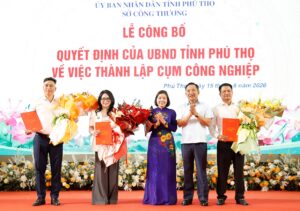
In recent years, the Government has progressively refined its policy framework for development in industrial clusters, with a focus on greater decentralisation, mobilisation of private resources for infrastructure investment, stronger environmental requirements, efficient land use, and improved access to premises for non-state business.
Key legal framework for incentives within industrial clusters
Sector-specific legislation on industrial clusters: Government Decree No. 32/2024/ND-CP dated 15 March 2024 on the management and development of industrial clusters; Government Decree No. 303/2026/ND-CP dated 1 August 2026 amending and supplementing Decree No. 32/2024/ND-CP, effective from 15 September 2026.
Investment legislation: Law on Investment No. 143/2025/QH15; Government Decree No. 96/2026/ND-CP providing detailed regulations and guidance on the implementation of the Law on Investment.
Land legislation: Land Law No. 31/2024/QH15; Government Decree No. 103/2024/ND-CP dated 30 July 2024 on land-use fees and land rental payments.
Tax legislation: Law on corporate income Tax No. 67/2025/QH15; Government Decree No. 320/2025/ND-CP; Circular No. 20/2026/TT-BTC.
State investment credit: Government Decree No. 32/2017/ND-CP on state investment credit; Government Decree No. 78/2023/ND-CP amending and supplementing Decree No. 32/2017/ND-CP.
Policies for private-sector development: Resolution No. 198/2025/QH15 of the National Assembly; Government Decree No. 20/2026/ND-CP providing detailed regulations and guidance on the implementation of certain provisions of Resolution No. 198/2025/QH15.
Accordingly, a project in infrastructure or a business operation within an industrial cluster may be eligible for several incentive schemes concurrently. However, eligibility for each incentive must be determined separately on the basis of its respective legal framework.
Industrial clusters as investment-incentivised locations and industrial cluster infrastructure as a sector eligible for special investment incentives
Under Article 25 of Decree No. 32/2024/ND-CP, investment incentives applicable to industrial cluster infrastructure development projects and business operation located within industrial clusters are based on the following principles: Industrial clusters in localities that are classified as socio-economically challenged; projects involving the development of technical infrastructure for industrial clusters that are classified as eligible for special investment incentives. Incentives applicable to infrastructure development projects and business operation within industrial clusters are implemented in accordance with legislation on land, taxation, credit and other relevant laws. Where different levels of incentives are provided under applicable legislation, the highest level shall be applied in accordance with the law.
Under Decree No. 96/2026/ND-CP, industrial parks, industrial clusters and export processing zones are classified as eligible for investment incentives and are entitled to incentives applicable to socio-economically challenged locations. This classification is important for determining the investment incentives applicable to projects implemented within industrial clusters. Annex II to Decree No. 96/2026/ND-CP further identifies “investment in the development, operation and management of industrial cluster technical infrastructure facilities” as a sector eligible for special investment incentives. Accordingly, from the perspective of investment policy, two principal categories of incentives may be identified:
Industrial cluster infrastructure development and operation projects: Projects involving the development and commercial operation of industrial cluster technical infrastructure are classified as projects operating in a sector eligible for special investment incentives and are entitled to investment incentives applicable to locations eligible for investment incentives.
Business operation within industrial clusters are entitled to location-based incentives and may also qualify for sector-specific incentives where their respective business activities fall within the prescribed list of sectors eligible for investment incentives.
This provides the general basis for determining specific incentives relating to land, taxation, credit and other forms of investment support.
Land-Related Investment Incentives
The Land Law No. 31/2024/QH15, effective from January 1st 2025, constitutes the principal legal framework governing land-related matters for industrial cluster investment projects. The Law provides for exemptions and reductions in land-use fees and land rental payments for projects operating in sectors or in locations eligible for investment incentives.
Government Decree No. 103/2024/ND-CP dated 30 July 2024 on land-use fees and land rental payments, effective from 1 August 2024, specifies the circumstances, levels and duration of land-rent exemptions and reductions.
For investment projects located within industrial clusters, eligibility for land-rent incentives should be assessed on the basis of the following factors taken together: the type of investment project; the sector or business activity of the project; the location of the project; methods of land allocation or land lease by the government; the duration of foundation construction works; and equivalent land-rent exemptions.
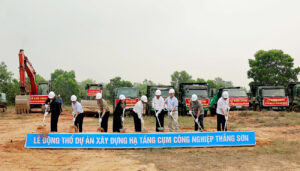
Exemption from land rent during the foundation construction period
Decree No. 103/2024/ND-CP provides for exemption from land rent during the foundation construction period for eligible projects.
This measure is particularly relevant to industrial cluster infrastructure projects, as the initial investment and construction phase may extend over a considerable period before the project generates sufficient revenue from subleasing land and providing infrastructure services.
The exemption period during the foundation construction phase is determined on the basis of the project’s approved construction schedule, subject to the statutory limits prescribed in Decree No. 103/2024/ND-CP and the investment and construction documentation approved by the competent authorities.
Land-rent exemptions following the foundation construction period
Decree No. 103/2024/ND-CP provides for different levels of land-rent exemption following the foundation construction period, depending on the combination of the project’s sector and location. Under the current investment framework, industrial clusters’ technical infrastructure is classified as a sector eligible for special incentives, while industrial clusters are classified as locations eligible for investment incentives corresponding to socio-economically disadvantaged areas. Accordingly, in principle, such projects with adequate criteria may qualify for a land-rent exemption following the foundation construction period, provided that all applicable requirements under land legislation are satisfied.
Manufacturing and business projects located within industrial clusters
Business operations within industrial clusters are eligible for location-based incentives. Under Decree No. 96/2026/ND-CP, industrial clusters are classified as locations eligible for investment incentives corresponding to socio-economically challenged areas. Where the manufacturing sector of a project falls within the list of sectors eligible for special investment incentives, a higher level of land-related incentives may apply in accordance with the relevant land legislation. Where the sector falls within the list of sectors eligible for investment incentives and the project also satisfies the relevant location-based criteria, the corresponding incentives may apply. Accordingly, land-related incentives for enterprises operating within industrial clusters are determined not solely by their location within an industrial cluster, but also by the business sector and the specific characteristics of the project.
Corporate income tax incentives
The classification of industrial clusters as locations eligible for investment incentives under Decree No. 96/2026/ND-CP does not mean that all projects located within industrial clusters automatically qualify for a uniform corporate income tax (CIT) rate. Tax incentives must be determined on the basis of the criteria and lists established under the Law on Corporate Income Tax and Decree No. 320/2025/ND-CP. Where a project simultaneously falls within an incentivised sector or an incentivised location and meets the conditions applicable to a new investment project, it may qualify for the corresponding tax exemptions and reductions.
Sector-specific tax incentives for manufacturing projects located within industrial clusters
Projects located within industrial clusters may qualify for tax incentives not only on the basis of their location but also their sector or business activity. Decree No. 96/2026/ND-CP revises the list of sectors eligible for investment incentives, with greater emphasis on science and technology, supporting industries, environmental protection, innovation and higher value-added manufacturing activities. Depending on the applicable requirements, incentivised sectors may include: research and development; high technologies and strategic technologies; supporting industries; production of energy-efficient products; manufacture of equipment and machinery; manufacture of selected industrial products; environmental protection; waste treatment and recycling; selected agricultural activities; and selected activities in the health, education, cultural and social sectors.
Import tax incentives
For industrial cluster infrastructure development projects, imported machinery and equipment used to form the project’s fixed assets may qualify for import duty exemption, subject to the conditions prescribed by tax legislation.
For manufacturing projects located within industrial clusters, machinery, equipment and certain imported goods used during operation may likewise qualify for duty exemption where they fall within the categories and meet the conditions prescribed by law.
This policy does not constitute a blanket exemption from import duties on all imported goods. Eligibility for exemption is determined with reference to the type of goods, their intended use, the investment project, applicable procedures and the specific conditions established under legislation on export and import duties.
State Investment Credit
State investment credit is currently provided under Decree No. 32/2017/ND-CP, as amended and supplemented by Decree No. 78/2023/ND-CP. Eligibility for investment credit includes the project falling within an eligible category, the investor having full legal capacity, compliance with applicable investment procedures, assessment and appraisal by the Vietnam Development Bank as being economical and having financial capacity to service the debt.
State budget support for industrial cluster infrastructure
Article 26 of Decree No. 32/2024/ND-CP establishes mechanisms for supporting investment in industrial cluster technical infrastructure. Under this framework, the State may provide budgetary support for industrial cluster infrastructure development in accordance with legislation on the state budget, public investment and other relevant regulations. The provision of such support is considered on the basis of central Government policies and the capacity of local authorities to balance public resources. Accordingly, budgetary support does not constitute a fixed percentage of investment capital applicable uniformly to all industrial clusters nationwide. Potential areas of support may include shared technical infrastructure, environmental protection infrastructure and common-use facilities, particularly in disadvantaged areas and industrial clusters that contribute to the development of local industries.
Industrial cluster infrastructure support under Resolution No. 198/2025/QH15
A broader policy framework, which is not limited to industrial clusters, is established under National Assembly Resolution No. 198/2025/QH15 on special mechanisms and policies for private-sector development. The Resolution provides a mechanism enabling local authorities to use public budgets to partially support investment in infrastructure systems serving industrial parks, industrial clusters and technology incubators. Potentially supported infrastructure components include: land acquisition and compensation; resettlement; transport infrastructure; electricity supply; water supply; drainage systems; wastewater treatment; and telecommunications infrastructure.
Government Decree No. 20/2026/ND-CP dated 15 January 2026 provides detailed regulations and guidance for the implementation of certain provisions of Resolution No. 198/2025/QH15, including mechanisms relating to infrastructure investment support and support for subleased land rental payments in industrial parks, industrial clusters and technology incubators.
Land allocation for SMEs, high-tech enterprises and innovative start-ups
Resolution No. 198/2025/QH15 introduces specific policies for beneficiaries in the private sector. For newly established industrial parks and industrial clusters falling within the scope of State-supported infrastructure investment, local authorities are required to reserve a certain amount of land to facilitate access to production premises for private-sector high-tech enterprises, SMEs and innovative start-ups.
Decree No. 20/2026/ND-CP provides detailed regulations on this policy. Under the current framework, eligible enterprises may receive a reduction in subleased land rental payments when entering into land-lease agreements with infrastructure developers of industrial parks, industrial clusters or technology incubators. The specific level of the reduction is determined by the provincial People’s Committee. The corresponding support is reimbursed by the State to the infrastructure developer in accordance with applicable regulations.
Interest rate support for green, circular and ESG projects
Article 9 of Resolution No. 198/2025/QH15 provides that enterprises in the private sector, business households and individual business operators may receive State interest-rate support equivalent to 2% per annum when borrowing capital to implement green projects, circular economy projects or projects applying environmental, social and governance (ESG) standards. This mechanism is not an incentive specifically designed for industrial clusters. Nevertheless, a number of projects located within industrial clusters may fall within its scope if they meet the relevant criteria for green projects, circular economy activities or ESG implementation. For infrastructure developers, facilities and activities relating to wastewater treatment, water reuse, renewable energy, energy efficiency and integrated environmental management may therefore warrant consideration within the broader framework of available financial and credit support mechanisms.
Policies for environmental infrastructure in industrial clusters
Environmental protection constitutes an integral component of industrial cluster development policy. Decree No. 32/2024/ND-CP provides for the development of industrial cluster technical infrastructure, including environmental infrastructure and waste treatment facilities as key components to be addressed throughout the investment, management and operational phases of industrial clusters. With regard to credit support, the list of projects eligible for State investment credit under Decree No. 78/2023/ND-CP includes investment projects for the construction of wastewater and solid waste treatment facilities in industrial clusters and craft villages, subject to the applicable classification of Group A and Group B projects. Accordingly, environmental infrastructure within industrial clusters may potentially benefit from multiple sources of support, including: State budget support under industrial infrastructure support policies; commercial credit; State investment credit for eligible project categories; financial support for green and circular economy projects where the relevant conditions are satisfied; and other lawful sources of financing.
Incentives relating to security for investment implementation
The 2025 Law on Investment and Decree No. 96/2026/ND-CP establish mechanisms for security for investment project implementation, including reductions in the required security amount for projects eligible for investment incentives. As investment in the development, operation and management of industrial cluster technical infrastructure is classified as a sector eligible for special investment incentives, such projects may qualify for a reduced level of security for project implementation in accordance with Decree No. 96/2026/ND-CP.
This constitutes an incentive applicable during the investment phase and is distinct from land-rent exemptions or tax incentives. Its principal benefit lies in reducing the amount of capital that investors are required to set aside in the form of investment project implementation security during the preparation and implementation stages. The specific application depends on whether the project is subject to the investment security requirement and whether the relevant statutory conditions are satisfied.
The current legal framework classifies industrial clusters as locations eligible for investment incentives and identifies investment in the development, operation and management of industrial cluster technical infrastructure as a sector eligible for special investment incentives.
This constitutes an important legal basis for continued efforts by the State to mobilise investment resources for infrastructure development and attract manufacturing and business projects into industrial clusters.
Overall, the current policy framework for industrial cluster development adopts an integrated approach combining investment incentives, land incentives, tax incentives, credit support and the state budget.
At the same time, the incentive framework is increasingly linked to broader policy objectives, including improving the quality and sustainability of investment, strengthening SMEs, promoting technological upgrading and innovation, enhancing environmental protection, and supporting the development of the private sector.
By Nguyễn Hoàng Nam Translated by Đặng Thị Lâm Tuyền