



To concretize the solutions for human resources development in Phú Thọ province under the Resolution of the 1st provincial party Congress for the 2025–2030 term and the orientations set out in the adjusted provincial Planning for the 2021–2030 period, with a vision to 2050, the Provincial People’s Committee issued Decision No. 3092/QĐ-UBND dated 12 September 2026 approving the human resources development Scheme of Phú Thọ province for the 2026–2030 period, with a vision to 2045.
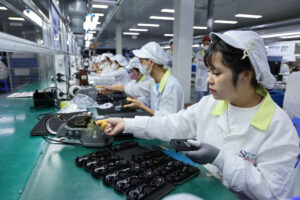
The implementation of the Scheme is identified as a strategic breakthrough, providing a foundation for developing a modern and transparent labour market; improving the quality of human resources to meet the requirements of economic restructuring; and positioning Phú Thọ as a locality with a high-quality workforce capable of adapting to digital transformation and innovation, thereby creating momentum for rapid and sustainable socio-economic development.
Opportunities and challenges in parallel
Phú Thọ province is identified as the regional centre of the Northern midlands and mountainous region. With a population of more than 4 million following the reorganisation of administrative units, including a labour force aged 15 and above of more than 2 million people, equivalent to over 52% of the population, the province possesses a significant competitive advantage in terms of labour supply during the period of the “golden population structure.”
During the 2020–2025 period, its economy maintained high and stable growth. In particular, in 2025, the province’s GRDP was recorded at VND 412.4 trillion, representing a growth rate of 10.52%. The economic and labour structures underwent positive transformation: the share of employment in industry, construction and services accounted for approximately 86.8%, while employment in agriculture, forestry and fisheries declined significantly to approximately 13.2%. Average labour productivity in 2025 was recorded at more than VND 200 million per worker per year, more than 1.7 times the 2020 level. The proportion of trained workers was at 73.3%, of whom 34.6% held degrees or professional certificates.
However, in the context of next-generation free trade agreements (FTAs) taking effect, shifts in global supply chains, and, in particular, the requirements arising from the digital and green economies and innovation, alongside the target of achieving average annual GRDP growth of 11–12% in the coming period, Phú Thọ’s labour market is facing significant challenges. The proportion of highly skilled workers capable of mastering new technologies, possessing digital skills, foreign-language proficiency, and management and innovation capabilities remains limited. In practice, enterprises operating in industrial parks and industrial clusters indicate that FDI enterprises and large-scale manufacturers frequently face shortages of high-quality human resources. Significant shortages are evident in key areas such as electronics, renewable energy, digital technologies, artificial intelligence (AI), logistics and business management. Linkages among government authorities, educational institutions (vocational education institutions and universities) and the business sector have not yet become sufficiently substantive, resulting in a reactive approach to forecasting labour supply and demand and a mismatch between the skills of trained workers and the practical needs of the labour market.
A foundation for a transparent, efficient and data-driven labour market
With a view to reforming the model for human resources governance and development by placing socio-economic development objectives, labour market demand and workers’ capabilities at the middle, the Scheme identifies a shift in management methods as a prerequisite. The core reform is to move from a management approach primarily based on labour statistics and periodic reporting towards human resources development governance based on objectives, competencies, data and outcomes. This will progressively establish the capacity to identify human resources needs, determine skills gaps, organise competency development, facilitate employment matching, measure outcomes, and support forecasting and policy implementation.
Specifically, the Scheme adopts the internationally recognised PDCA management cycle (Plan–Do–Check–Act) to design processes for policy formulation, implementation and evaluation. This approach ensures that labour policies are continuous, measurable and capable of being flexibly adjusted in response to economic changes.
This Scheme adopts an integrated digital human resources ecosystem approach. The ecosystem places data at its core and applies artificial intelligence (AI) and Big Data analytics to strengthen real-time governance and management capacity. Accordingly, the province will establish a Human Resources Intelligent Operations Centre (HR-IOC) and a Human Resources Data Platform (HR Data Platform). These systems will be capable of analysing recruitment trends across the province, enabling competent authorities and training institutions to identify early risks of labour supply-demand imbalances and accurately forecast the quantity and quality of human resources shortages in key economic sectors. Combined with an individual competency identification system (Skill-ID), the platform will facilitate connections between workers and employers, reduce the costs and time associated with job searches, and ensure transparency and equal opportunities for all citizens.
Boosting quality to meet economic restructuring requirements and the practical needs of enterprises
Improving the quality of human resources should not be limited to increasing the proportion of trained workers; it must also accurately and promptly respond to the requirements of economic restructuring and the practical needs of businesses.
To achieve the objectives set out, the Scheme establishes a methodology for determining human resources needs based on five strategic layers:
(1) Supporting economic growth and productivity enhancement;
(2) Supporting economic restructuring;
(3) Supporting digital transformation and the development of the digital economy;
(4) Supporting growth-driving economic sectors;
(5) Supporting science and technology, innovation, and the development of a knowledge ecosystem.
Resources will be prioritised for development in alignment with the province’s priority economic sectors and emerging development pillars, while closely reflecting enterprise demand:
High-tech industry and manufacturing and processing: Becoming the province’s principal growth driver through the development of industrial parks, industrial clusters and high-tech industries.
Logistics, trade and modern services: Establishing a regional logistics and services hub while developing the digital economy and modern trade.
Tourism, culture and indigenous service-based economy: Leveraging the cultural heritage of the Hùng Kings, eco-tourism, community-based tourism and experiential services.
High-tech agriculture and the rural economy: Developing ecological and smart agriculture, the rural economy and agricultural value chains.
Digital transformation, AI and science and technology: Establishing new growth drivers based on science and technology, innovation and the digital economy.
Development governance and innovative leadership: Improving the quality of leadership and management personnel in both the public and private sectors.
Competency framework
Based on the human resources development objectives set out in Resolution No. 33-NQ/TU, and with the aim of closely aligning education and training learning outcomes with the practical needs of enterprises, Competency Framework for Phú Thọ’s human resources is structured into eight strategic competency groups, comprehensively reflecting the requirements for human resources development in the new period.
– Digital citizenship and lifelong learning: Equipping all citizens with foundational competencies, including digital skills, foreign-language proficiency, artificial intelligence skills, soft skills, lifelong learning capabilities, and the ability to adapt to modern working environments.
– Occupational competencies and labour skills: Standardising occupational competencies according to job positions; developing vocational, practical and adaptive skills to increase the proportion of trained and skilled workers and improve labour productivity.
– Digital, science and technology, AI and STEM: Developing human resources in science, technology, digital transformation, artificial intelligence, data and STEM; meeting the requirements of the digital economy and innovation.
– Innovation and entrepreneurship: Developing capabilities in research, innovation, entrepreneurship, product development and technology transfer, thereby contributing to enhancing the competitiveness of the local economy.
– Management and leadership: Developing modern management capabilities among leaders and managers in the public and private sectors; strengthening digital governance, innovation management and results-based management capabilities.
– Competencies for key economic sectors: Developing competency standards serving the province’s key industries and sectors in accordance with the Provincial Planning, including processing and manufacturing industries, high-tech industries, logistics, trade, tourism, high-tech agriculture, healthcare, education and high-quality services.
– International integration: Developing foreign-language proficiency, international working skills, cooperation capabilities, technology transfer capabilities, and the ability to adapt to regional and international labour markets.
– Adaptability and sustainable development: Developing capabilities to adapt to the green transition, circular economy and sustainable development, while ensuring equal access to training and employment opportunities for all groups; contributing to inclusive development and the principle of leaving no one behind.
Development policies
Human resources development is identified as one of the strategic pillars of the province’s socio-economic development, with five major policy groups:
– Training and standardisation of human resources: Strengthening vocational training in line with labour market demand and the development orientation of priority sectors; standardising curricula in accordance with the Vietnamese national qualifications framework, with a view to international standards; expanding State–University–Enterprise cooperation models to ensure that graduates secure suitable employment.
– Development and attraction of human resources to the province: Focusing on the training and attraction of experts, engineers and skilled technical workers in industry, high-tech sectors and modern services; applying tailored incentive policies and creating an innovative working environment to attract talented professionals and scientists.
– Linking training with the labour market: Completing the labour market information system, establishing a digital employment exchange, and supporting occupational transitions, particularly for agricultural workers; developing employment centres, career counselling and entrepreneurship support systems.
– Development of civil servants and public employees: Standardising the competencies of public administration personnel towards modern, digital and clearly defined management; strengthening digital skills, foreign-language proficiency and international integration capabilities among young officials; applying performance-based assessment and accountability mechanisms.
– Mobilising resources and promoting cooperation in human resources development: Diversifying funding sources from the State budget, enterprises, social mobilisation and international cooperation; expanding partnerships with domestic and international universities and research institutes; and encouraging enterprises to establish in-house training facilities aligned with the province’s human resources development strategy.
The human resources development Scheme of Phú Thọ province for the 2026–2030 period, with a vision to 2045, aims to establish a modern and integrated human resources governance model that places people at the centre, regards human resources quality as a driver of development, and uses data as the foundation for leadership, direction, management and policymaking.
Successful implementation of the Scheme will enable Phú Thọ province to address shortages of highly qualified workers, develop a workforce capable of mastering new technologies, and better meet enterprise requirements in the era of globalisation. It will contribute to positioning Phú Thọ as a centre for high-quality human resources development in the Northern midlands and mountainous region, realising the aspiration to build a prosperous, happy and sustainably developed Phú Thọ, and to become a city by 2045.
Translated by Đặng Thị Lâm Tuyền By Nguyễn Hoàng Nam